
Human hair toppers are a popular solution for women experiencing thinning hair because they offer a natural appearance and versatile styling options. However, one of the most common questions buyers ask is: How long do human hair toppers last?
The lifespan of a human hair topper depends on several factors, including hair quality, base construction, how often it is worn, and how well it is maintained.
In this guide, we explain how long you can expect a human hair topper to last, what affects its durability, and how to care for it so you can enjoy it for as long as possible.
A high-quality human hair topper can typically last around 6 to 12 months with regular use, although some may last longer with careful maintenance and less frequent wear. The actual lifespan varies depending on the hair quality, base material, styling habits, and care routine.
Unlike natural hair growing from the scalp, a human hair topper does not receive natural oils from your scalp in the same way. Its hair can gradually become dry, tangled, or worn, especially with frequent heat styling and washing.
Here is a general guide to expected lifespan:
| Frequency of Use | General Lifespan Estimate |
|---|---|
| Daily wear | Around 6–12 months |
| Several days a week | Around 9–18 months |
| Occasional wear | Potentially 1–2 years or longer |
These estimates are general guidelines, not guarantees. Individual results can vary considerably depending on product construction and maintenance.
The quality of the human hair is one of the most important factors affecting longevity.
Higher-quality human hair generally retains its softness, movement, and appearance better when properly maintained. Hair that has undergone extensive chemical processing may become dry or fragile more quickly.
When choosing a human hair topper, consider the hair’s texture, condition, and processing history. A good-quality topper should feel smooth, move naturally, and be relatively easy to detangle with appropriate care.
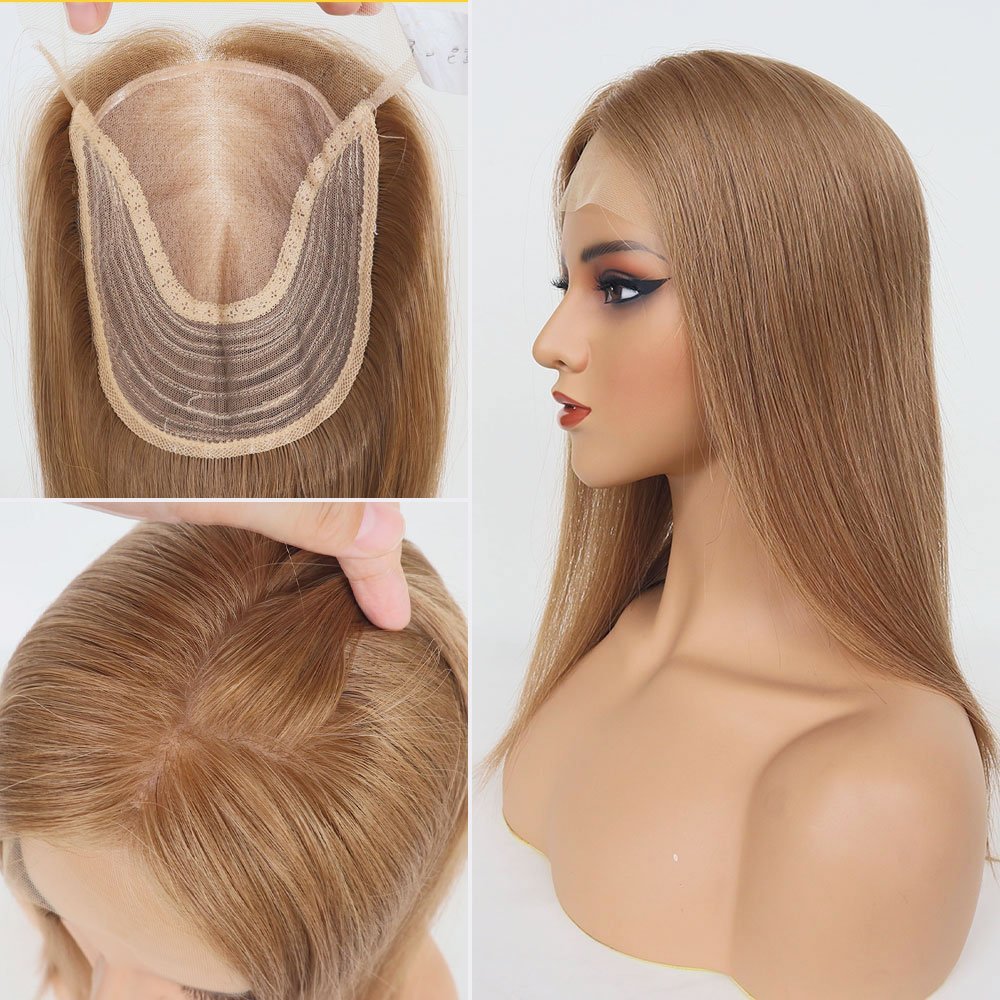
The base is another important part of a topper’s overall durability.
Different base constructions offer different combinations of realism, comfort, and maintenance requirements.
No single base type guarantees the longest lifespan. Overall construction quality, hair quality, and handling all matter.
A topper worn every day will generally experience more friction, brushing, washing, and environmental exposure than one worn occasionally.
Daily wear may also expose the hair to sweat, sunlight, clothing friction, and styling products. Over time, these factors can contribute to tangling and dryness.
If you own more than one topper, rotating between them may reduce wear on each piece and help extend its useful life.
Human hair toppers can often be styled with heat, but repeated exposure to high temperatures may gradually damage the hair.
To reduce unnecessary wear:
Even genuine human hair can become brittle when exposed to excessive heat or harsh chemicals.
Improper washing and brushing can shorten the lifespan of a human hair topper.
Washing too frequently may contribute to dryness, while aggressive brushing can cause breakage or loosen hairs from the base.
Use products suitable for human hair toppers, detangle gently, and follow the manufacturer’s washing instructions. Avoid scrubbing, twisting, or pulling the base while cleaning.
With a consistent care routine, you can help preserve the hair’s appearance and protect the base.
Start at the ends and gradually work toward the roots. Hold the hair near the base when detangling to reduce tension on the knots, seams, and attachment points.
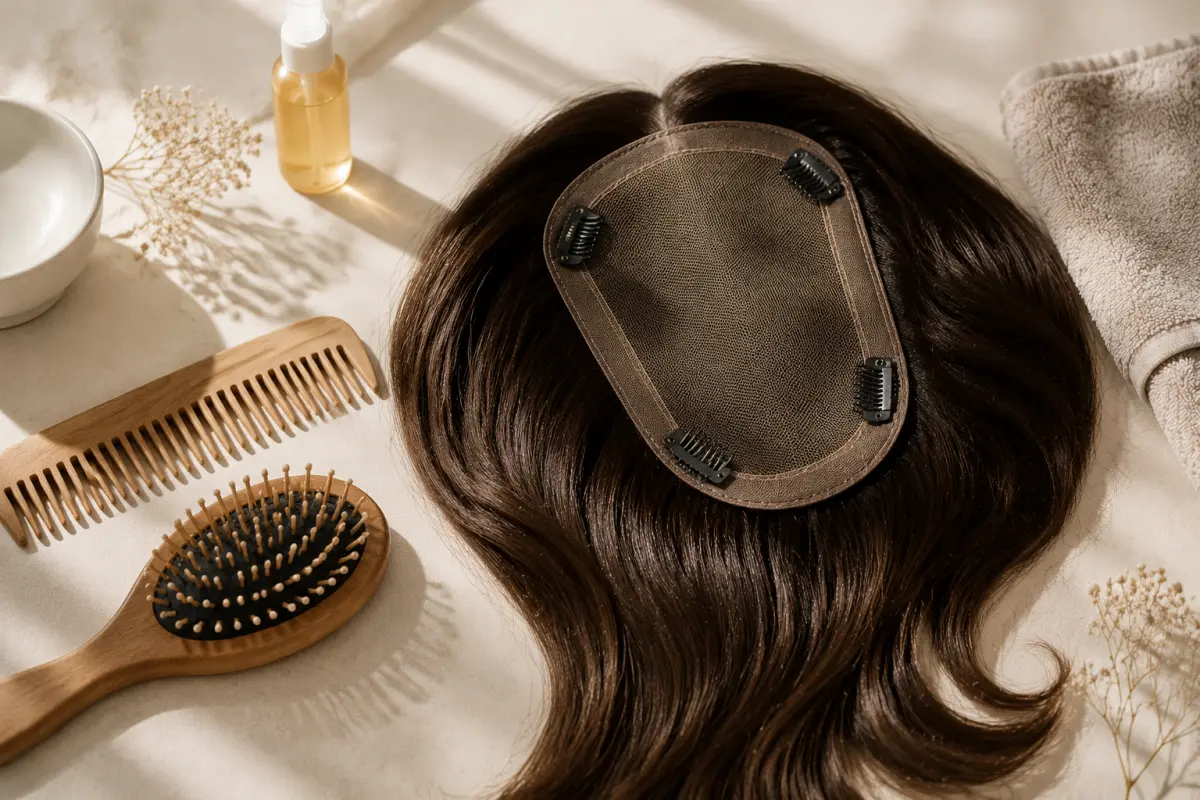
Use a suitable wide-tooth comb or gentle brush, depending on the hair texture and manufacturer’s recommendations.
You do not necessarily need to wash your topper after every wear. Washing frequency depends on how often you use it, how much product you apply, and exposure to sweat or environmental dirt.
When washing:
Always follow the care instructions provided with your specific topper, particularly if it has a delicate lace or silk base.
Whenever practical, allow the topper to air-dry on an appropriate wig stand or holder. Avoid placing it near direct heat sources.
Do not brush the hair aggressively while it is wet, as wet hair may be more vulnerable to stretching and breakage.
When you are not wearing your topper, store it in a clean, dry place away from direct sunlight, excessive heat, and dust.
Make sure the hair is detangled before storage. A suitable stand can help preserve its shape and reduce tangling.
Always hold a topper by its base or designated attachment areas rather than pulling on the hair. Open and close clips gently, and inspect the base periodically for loose seams, stretched lace, or other signs of wear.
For clip-in toppers, make sure the clips are positioned securely without creating unnecessary tension on your natural hair.
Even with careful maintenance, a topper will eventually show signs of wear. Consider replacing it when you notice one or more of the following:
Some issues may be repairable, depending on the construction and extent of the damage. A damaged base or substantial hair loss, however, may mean the topper has reached the end of its useful life.
Price alone does not determine how long a topper will last. A higher-priced topper may offer better hair quality, more detailed construction, or a more natural-looking base, but these features should be evaluated individually.
When comparing toppers, consider:
A topper that suits your lifestyle and can be maintained properly may offer better long-term value than one chosen solely for its appearance or price.
Human hair toppers generally offer greater styling versatility, but their lifespan depends on hair quality and care. Synthetic toppers may retain their original style more easily, although they can be sensitive to heat and may become frizzy or worn with friction.
Neither type has a guaranteed lifespan. If natural movement, styling flexibility, and a realistic appearance are your priorities, a human hair topper may be worth considering. If minimal styling is more important, a synthetic option may suit your needs.
So, how long do human hair toppers last? Many can last around 6 to 12 months with regular wear, while less frequent use and careful maintenance may extend their useful life.
The key is to choose a well-constructed topper, handle the base gently, avoid excessive heat, and follow a consistent care routine.
At HYLUX Hair, you can explore human hair toppers in different base constructions and coverage sizes to find an option that suits your styling preferences and everyday needs.
Choose a topper that fits your needs, and care for it consistently to get the most value from your investment.